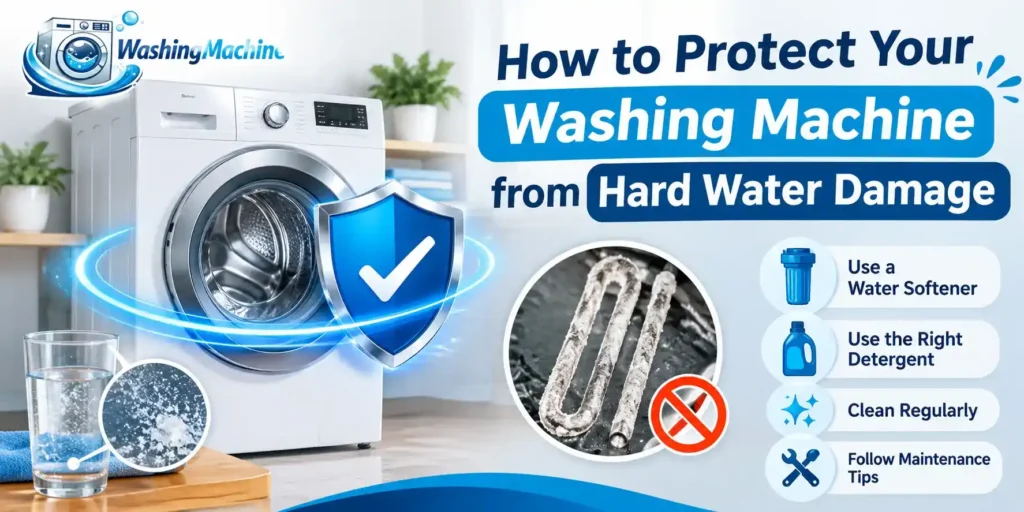
If your clothes feel stiff after a wash, your detergent barely lathers, or you’ve spotted a white crust around the drum door, hard water is probably the cause. Many Indian homes, especially those that rely on borewell or tanker water, receive water with high levels of calcium and magnesium. Your machine feels the effect every day.
This guide explains how to protect your washing machine from hard water, what the damage looks like, and when to book a washing machine repair service before a small fault becomes an expensive one.
Is Hard Water Damaging Your Washing Machine?
White scale, poor heating, slow draining, or stiff clothes are early signs of hard water damage. Get professional washing machine repair in Pune before a small fault turns into an expensive breakdown.
Call +91 78350 37905What Is Hard Water, and Why Does It Matter?
Hard water contains dissolved calcium and magnesium. When it is heated or evaporates, these minerals separate out and form a chalky deposit called limescale.
Limescale:
- Builds up on heating elements, valves, pipes, and the drum
- Reduces the effectiveness of detergent
- Leaves residue on clothes and inside the machine
- Strains mechanical and electrical parts over time
Most of this happens out of sight, so damage often goes unnoticed until the machine stops working.
Common Washing Machine Hard Water Problems
1. Stiff, dull clothes. Minerals bind with detergent and leave residue in the fabric. Whites turn grey and colours fade faster.
2. Poor lather and weak cleaning. You end up using more detergent for the same result.
3. White or grey deposits around the door seal, detergent drawer, and drum holes.
4. Water not heating, or long wash cycles. Scale on the element acts like insulation. This is the most common reason people search for washing machine not heating water solutions.
5. Slow filling. A scaled inlet filter or valve is behind most cases of washing machine not filling with water.
6. Slow draining or standing water. Scale and lint often cause a washing machine not draining complaint.
7. Musty smell. Mineral deposits trap soap scum and moisture, which encourages mould.
8. Error codes and noises. Scale in the pump or valves can trigger inlet or drain errors and humming sounds.
Hard Water Damage in Washing Machine: Which Parts Suffer
Heating Element
Scale forces the element to work harder and use more power, and it eventually burns out. Heating element replacement is one of the most frequent repairs in hard water areas.
Inlet Valve and Filter
Mineral particles block the mesh filter and make the valve stick. A faulty inlet valve leads to low water levels or no filling at all, and often needs water inlet valve replacement.
Drain Pump and Hoses
Scale narrows pipes and jams the pump. Drain pump repair is a common fix for slow draining, loud humming, or water left in the drum.
Drum, Bearings, and Spider Assembly
Moisture and mineral buildup can contribute to rust and early wear. Worn parts cause loud grinding during the spin cycle and may need drum bearing replacement.
Door Seal, Gasket, and Door Lock
Deposits make rubber stiff and prone to leaks. Scale and grime can also interfere with the latch, leading to door lock repair or door gasket replacement.
Control Board (PCB)
Repeated faults from the heater or valves can stress the electronics. PCB repair or board replacement is among the costliest repairs, which is why prevention matters.
Hard Water Effects on Washing Machine Performance and Cost
- Higher electricity bills from scaled heating elements
- More detergent and fabric softener to make up for poor cleaning
- Shorter machine life, since parts wear out sooner
- Frequent breakdowns needing washing machine spare parts replacement
A machine that could last 10 to 12 years may need major repairs much earlier without proper care.
How to Protect Your Washing Machine from Hard Water
1. Install a Hard Water Softener for Your Washing Machine
Treating water before it enters the machine is the best long-term fix. A hard water softener for washing machine use can be:
- Inline water softener or filter: fits on the inlet pipe and is a budget-friendly choice.
- Whole-house water softener: protects your washer, geyser, taps, and pipes together.
- Salt-free scale inhibitor: reduces how easily minerals stick to surfaces.
Replace cartridges or refill salt as the manufacturer recommends. If you’re unsure which system suits your home, ask a technician offering washing machine installation and water treatment advice.
2. Run a Descaling Cycle Regularly
Washing machine descaling dissolves existing mineral buildup. Use a branded descaler, or white vinegar or citric acid (check your manual first). Run an empty hot cycle every one to two months in very hard water, or every three months in moderately hard water. A professional washing machine deep cleaning service also reaches areas you can’t clean yourself.
3. Use the Right Amount of Detergent
Excess detergent mixes with minerals and leaves residue. Use a hard-water-friendly detergent and follow the dosage on the label.
4. Clean the Inlet Filter
Every few months, turn off the tap, disconnect the inlet hose, and rinse the mesh filter. This simple step prevents many filling problems.
5. Clean the Drain Filter
Front-load machines have a drain filter near the bottom front panel. Clear it every one to two months to remove lint, coins, and scale flakes. This is especially important for front load washing machine repair prevention.
6. Wipe the Door Seal and Detergent Drawer
Remove trapped water and lint from the rubber gasket after washing, and rinse the drawer monthly.
7. Keep the Door Open After Washing
This lets moisture escape and prevents mould, odour, and rust.
8. Don’t Overload the Machine
Overloading strains the motor and bearings, and clothes rinse poorly. This applies to top load washing machine repair issues too, such as agitator and motor strain. Stick to your machine’s rated capacity.
Washing Machine Maintenance Tips for Hard Water Areas
After every wash
- Leave the door and drawer open
- Wipe the door seal
Monthly
- Clean the detergent drawer
- Check the drum and seal for white deposits
- Clear the drain filter
Every 1 to 3 months
- Run a descaling cycle
Every 3 to 6 months
- Clean the inlet filters
- Inspect hoses for cracks or scale
- Check that the machine is level and the drain pipe isn’t kinked
Once a year
- Book a washing machine service at home to inspect the heating element, pump, valves, and bearings
For hassle-free upkeep, consider a washing machine AMC (annual maintenance contract), which covers regular servicing and discounted repairs.
When to Call a Professional
Book a washing machine repair service if you notice:
- The machine isn’t heating water
- Water won’t fill or drain after cleaning the filters
- Persistent error codes or a blinking display
- Leaks from the bottom or door
- Loud grinding, banging, or vibration
- A burning smell
- The machine won’t start or the door won’t lock
Repairing electrical parts yourself is unsafe and may void your warranty.
Brand-Specific Repair Support
Different brands have different parts and error codes, so choose a technician with experience on your model. Look for LG washing machine repair, Samsung washing machine repair, IFB washing machine repair, Whirlpool washing machine repair, Bosch washing machine repair, and Godrej washing machine repair, depending on what you own. Whether you have a semi-automatic, fully automatic top load, or front load machine, a brand-trained technician can diagnose scale-related faults faster and use compatible parts.
Washing Machine Repair in Pune
Water from borewells and tankers across Pune often carries a heavy mineral load. Scale-related faults such as burnt heating elements, jammed valves, and blocked pumps are common service calls.
If you need washing machine repair in Pune, look for a provider that offers:
- Doorstep washing machine repair with a clear diagnosis
- Upfront pricing and transparent visit charges
- Genuine or quality-tested spare parts
- Warranty on parts and labour
- Quick response times and good reviews
Searching for washing machine repair near me will show many options. Compare reviews, confirm charges, and ask whether the technician also advises on water treatment so the problem doesn’t return. Our team provides repair across Pune areas such as Kothrud, Baner, Wakad, Hinjewadi, Aundh, Viman Nagar, and Hadapsar.
Is Prevention Worth It?
Yes. A water softener or inline filter is a modest expense, and descaling products cost little. Replacing a heating element, pump, or control board can cost a significant share of the machine’s price. Prevention keeps your clothes softer, your bills lower, and your machine running longer.
Areas We Serve in Pune
Need washing machine repair in your area? Call our team for assistance.
☎ Call Now: +91 78350 37905Final Thoughts
Hard water slowly strains key components and shortens the life of even good machines. To protect your washing machine:
- Treat the water with a softener or inline filter
- Descale regularly
- Use the right detergent quantity
- Clean filters, seals, and drawers
- Schedule professional servicing or an AMC
If your machine already shows signs of damage, don’t wait for a complete breakdown. Book a washing machine repair service today and get it back to working order.