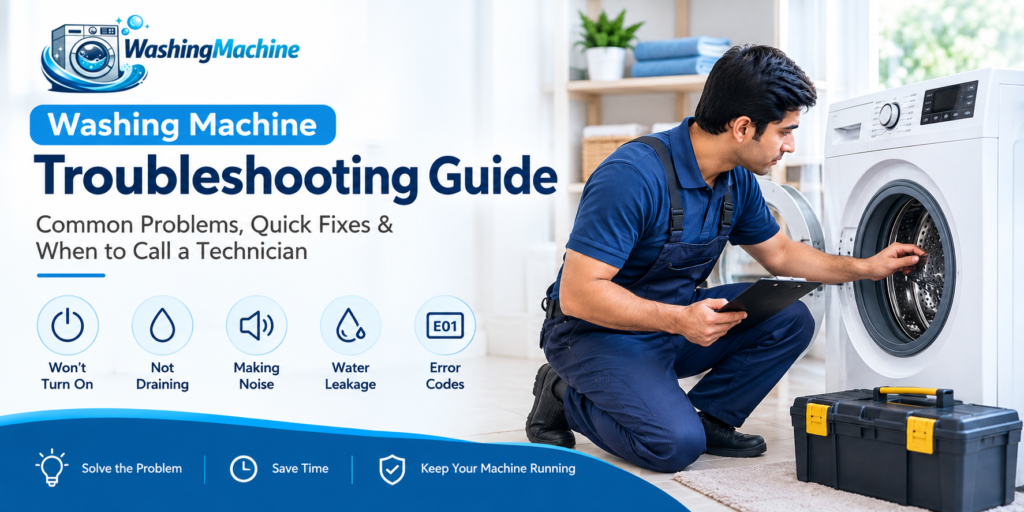
A washing machine can develop different problems over time. It may suddenly stop working, fail to drain water, make unusual noises, leak during a cycle, or display an error code. Some problems can be resolved with simple checks at home, while others require professional inspection.
Knowing what to check first can help you avoid unnecessary troubleshooting and identify when a technician is needed. This washing machine troubleshooting guide covers common problems, quick checks, possible causes, and situations where professional repair is the safer option.
If basic checks do not solve the problem, professional washing machine repair in Pune can help identify the actual fault and determine whether a component needs repair or replacement.
Washing Machine Problem You Can’t Fix?
Get professional help when basic troubleshooting does not solve the problem.
Call +91 78350 37905How to Troubleshoot a Washing Machine
Before troubleshooting a specific problem, start with a few basic checks.
- Make sure the washing machine is connected to a working power socket.
- Check that the water supply is turned on.
- Make sure the door or lid is properly closed.
- Check the drain hose for visible kinks or blockages.
- Look at the display for an error code.
- Make sure the machine is not overloaded.
- Check whether clothes are unevenly distributed inside the drum.
- Turn the machine off and restart it if the manufacturer’s instructions allow a reset.
Do not remove electrical panels or attempt to work on internal wiring, motors, control boards, pumps, or other electrical components unless you have the appropriate technical knowledge.
Washing Machine Won’t Turn On
When a washing machine does not respond after pressing the power button, begin with the power supply rather than assuming that an internal component has failed.
Check the following:
- Power socket
- Plug connection
- Circuit breaker
- Power cord
- Door or lid position
- Display panel
If the socket works but the washing machine remains completely unresponsive, the problem may involve the power supply, control board, door-lock system, or another internal component.
A persistent washing machine won’t turn on problem should be professionally inspected if basic power checks do not resolve it.
Washing Machine Is Not Draining
Water remaining inside the drum after a wash cycle usually indicates a drainage problem. A blocked hose, clogged filter, or drainage pump issue can prevent the machine from removing water.
Start by checking:
- Drain hose for kinks
- Drain connection
- Accessible pump filter
- Excessive load
- Error messages on the display
If the hose or filter is blocked, cleaning it according to the manufacturer’s instructions may solve the issue. However, if the pump is damaged or there is an internal blockage, professional repair may be necessary.
A recurring washing machine not draining problem should not be ignored because continued use can interrupt wash cycles and leave clothes sitting in dirty water.
Washing Machine Is Not Spinning
A washing machine may fill with water and complete part of the wash cycle but fail to spin properly.
One of the first things to check is the load. Heavy items such as blankets, towels, or multiple large garments can become unevenly distributed and prevent the machine from spinning correctly.
Check whether:
- The drum is overloaded.
- Clothes are gathered on one side.
- The door or lid is properly closed.
- Water has drained from the drum.
- The selected programme includes a spin cycle.
If the machine repeatedly refuses to spin despite having a balanced load, the problem could involve the motor, belt, door or lid lock, drive system, drainage system, or control components.
Avoid repeatedly forcing the machine into spin mode if you hear grinding, burning, or other unusual sounds.
Washing Machine Is Making Loud or Unusual Noises
A washing machine can make some noise during normal operation, particularly during high-speed spinning. However, a sudden change in sound may indicate a problem.
Start with simple checks:
- Remove coins or objects from pockets.
- Redistribute clothes inside the drum.
- Check whether the machine is level.
- Make sure the appliance is not touching a wall or furniture.
- Identify whether the noise occurs during washing, draining, or spinning.
Different sounds can point to different issues. Banging may be related to an unbalanced load, while grinding, squealing, or persistent rumbling may indicate a mechanical problem.
If your washing machine is making noise even with a properly balanced load, professional inspection can help identify whether the issue involves the drum, motor, bearings, suspension, or another component.
Washing Machine Is Leaking Water
Water leakage should be investigated promptly because continued operation can damage flooring and surrounding areas.
Check visible areas such as:
- Water inlet hose
- Drain hose
- Hose connections
- Door seal
- Detergent drawer
- Area underneath the machine
A front-load machine may leak from a damaged or dirty door seal, while an incorrectly connected hose can also cause water to escape.
Using too much detergent may create excessive foam and contribute to leakage in some situations.
If the source of the washing machine water leakage cannot be identified, stop using the appliance until it can be inspected safely.
Washing Machine Shows an Error Code
Modern washing machines use display codes to alert users when the appliance detects an operating or component-related problem.
The exact meaning of an error code depends on the manufacturer and model.
When a code appears:
- Take note of the exact code.
- Check the manufacturer’s instructions.
- Follow any recommended basic troubleshooting steps.
- Perform a reset only if recommended.
- Check whether the same code returns.
Repeated washing machine error codes can indicate a problem that requires professional diagnosis rather than repeated resets.
It is also important not to assume that an error code has the same meaning across Samsung, LG, Bosch, Whirlpool, IFB, Haier, or other brands.
Washing Machine Is Not Filling With Water
If the washing machine starts but does not fill with water, first check the external water supply.
Look at:
- Water supply valve
- Inlet hose
- Water pressure
- Inlet filter
- Door or lid
- Displayed error code
A kinked inlet hose or closed water valve can sometimes be resolved without technical assistance.
If the water supply is normal but the drum still does not fill, the inlet valve, sensor, control system, or another internal component may need inspection.
Washing Machine Stops in the Middle of a Cycle
A machine that repeatedly stops before completing a wash cycle can have several possible causes.
Start by checking:
- Power supply
- Water supply
- Drainage
- Load size
- Error codes
- Door or lid lock
Pay attention to when the washing machine stops. For example, stopping while filling may point toward a water-supply problem, while stopping during draining may indicate a drainage issue.
If the machine stops at the same stage during multiple cycles, professional diagnosis can help identify the underlying fault.
Washing Machine Is Not Cleaning Clothes Properly
Not every washing problem is caused by a mechanical fault.
Poor cleaning can result from:
- Overloading the drum
- Using too little or too much detergent
- Selecting an unsuitable programme
- Incorrect water temperature
- Dirty drum
- Blocked detergent drawer
- Washing heavily soiled items with an unsuitable cycle
Start by following the manufacturer’s recommended load capacity and detergent instructions.
Regular washing machine maintenance can also help prevent detergent buildup and residue from affecting washing performance.
If clothes remain poorly cleaned despite correct loading, detergent, and programmed selection, professional inspection may be appropriate.
Washing Machine Has a Bad Smell
An unpleasant smell can develop when moisture, detergent residue, dirt, or other buildup remains inside the washing machine.
To reduce odors:
- Leave the door or lid open after a cycle when appropriate.
- Wipe the door seal regularly.
- Clean the detergent drawer.
- Follow the manufacturer’s drum-cleaning instructions.
- Avoid leaving wet clothes inside for long periods.
- Keep the area around the appliance clean and dry.
Regular cleaning is particularly important for machines used frequently or in households where multiple wash cycles are performed every week.
Washing Machine Is Vibrating or Moving
Some vibration is normal during high-speed spinning, but excessive movement should be checked.
Possible reasons include:
- Uneven flooring
- Incorrect leveling
- Unbalanced load
- Overloading
- Machine touching a wall
- Installation problems
Redistribute the clothes and check whether the appliance is level.
If excessive vibration continues even with a balanced load and stable flooring, an internal mechanical issue may need to be investigated.
Washing Machine Door or Lid Is Not Locking
A front-load washing machine generally needs the door to lock before certain programmes can begin.
If the door does not lock:
- Check for clothing caught between the door and seal.
- Make sure the door is completely closed.
- Check the door seal for visible damage.
- Restart the appliance according to the manufacturer’s instructions.
- Look for an error message.
Do not force the door closed. A damaged door-lock mechanism may require professional repair.
Washing Machine Is Taking Too Long to Complete a Cycle
Longer cycles are not always a sign of a fault. Some modern washing machines automatically adjust cycle time depending on load size, water temperature, programme selection, and other conditions.
However, investigate if the machine suddenly begins taking significantly longer than usual.
Check:
- Water supply
- Drainage
- Selected programme
- Load size
- Error messages
- Water heating
If the machine repeatedly pauses or extends the cycle without an obvious reason, a technician may need to inspect the appliance.
Front Load vs Top Load Washing Machine Problems
Front-load and top-load washing machines share many basic problems, but their designs are different.
Front-load machines commonly require attention to:
- Door seal
- Door-lock mechanism
- Drainage system
- Detergent drawer
- Drum maintenance
Top-load machines can have issues involving:
- Lid switch or lock
- Water inlet system
- Agitator or pulsator
- Drainage
- Spin mechanism
The correct troubleshooting process depends on the machine’s brand, model, design, and symptoms.
If you are dealing specifically with a front-load appliance, front-load washing machine repair may involve components and troubleshooting steps that differ from those used on some top-load models.
Can You Troubleshoot a Washing Machine Yourself?
Some basic troubleshooting is suitable for homeowners when it does not involve opening the appliance or handling electrical components.
You can safely start with checks such as:
- Testing the power socket
- Checking the water supply
- Inspecting visible hoses
- Redistributing an unbalanced load
- Cleaning accessible filters according to manufacturer instructions
- Checking the selected programme
- Cleaning the detergent drawer
- Performing a manufacturer-recommended reset
However, avoid opening electrical panels or attempting to repair motors, control boards, wiring, pumps, or other internal components without the necessary expertise.
When Should You Call a Washing Machine Repair Technician?
Professional assistance becomes important when basic troubleshooting does not resolve the problem.
You should consider contacting a technician when:
- The machine repeatedly stops working.
- It will not spin after basic checks.
- Water continues leaking.
- The same error code keeps returning.
- The motor produces unusual sounds.
- The appliance trips the electrical supply.
- The control panel behaves unexpectedly.
- The drum does not move correctly.
- An internal component appears to require replacement.
Continuing to operate an appliance with an electrical, mechanical, or serious water-related problem can potentially make the damage worse.
Washing Machine Repair in Pune
For customers searching for washing machine repair in Pune, the right service can depend on the machine type, brand, problem, and location.
Service requirements can vary across Pune areas, including Baner, Hinjewadi, Kharadi, Koregaon Park, Pimpri-Chinchwad, and other localities.
When requesting service, keep these details available:
- Washing machine brand
- Model number
- Front-load or top-load type
- Main problem
- Error code, if any
- Approximate age of the machine
For example, someone looking for washing machine repair in Pimpri-Chinchwad may need a different local service page than a customer searching specifically for Hinjewadi. Providing the exact locality can make it easier to arrange an appropriate service visit.
How to Prevent Common Washing Machine Problems
Regular care can reduce avoidable washing machine problems and help the appliance operate efficiently.
Avoid overloading
Use the manufacturer’s recommended capacity. Overloading can affect washing, drainage, and spinning performance.
Check pockets before washing
Coins, keys, pins, and other objects can enter the drum and potentially cause blockages or unusual noises.
Clean the machine regularly
Clean accessible filters, detergent compartments, door seals, and the drum according to the manufacturer’s recommendations.
Keep the machine level
A properly leveled washing machine is less likely to move excessively during high-speed spinning.
Use the correct detergent
Use detergent appropriate for your washing machine and follow the recommended quantity.
Pay attention to new sounds or changes
A sudden noise, repeated error code, unusual smell, leakage, or recurring cycle interruption can indicate a developing problem.
Washing Machine Troubleshooting: Quick Reference
| Washing Machine Problem | First Things to Check |
| Won’t turn on | Power socket, plug, breaker and door/lid |
| Not draining | Drain hose, filter and drainage system |
| Not spinning | Load balance, door/lid and drainage |
| Making unusual noise | Load balance, leveling and foreign objects |
| Leaking water | Hoses, connections and door seal |
| Showing an error code | Exact code and manufacturer’s instructions |
| Not filling with water | Water supply, inlet hose and filter |
| Stops mid-cycle | Power, water, drainage and error code |
| Poor cleaning | Load size, detergent and wash programme |
| Bad smell | Door seal, detergent drawer and drum |
| Excessive vibration | Leveling and load distribution |
| Door won’t lock | Door position, seal and locking mechanism |
Frequently Asked Questions
What is the most common washing machine problem?
Common washing machine problems include drainage failures, spinning issues, water leakage, power problems, unusual noises, water supply problems, and error codes. The actual cause depends on the washing machine’s brand, model, age, and condition.
Why is my washing machine not working properly?
Start by checking the power supply, water supply, drainage, load size, door or lid position, and display for error codes. If the machine continues to malfunction after these basic checks, it may require professional inspection.
Can I fix a washing machine myself?
Basic checks such as inspecting visible hoses, balancing the load, checking the power supply, and cleaning accessible filters can often be performed at home. Internal electrical and mechanical repairs should be handled by an appropriately qualified technician.
How do I know if my washing machine needs repair?
Repeated error codes, persistent leakage, failure to drain or spin, unusual mechanical sounds, electrical problems, and recurring cycle interruptions can indicate that professional inspection is required.
Why does my washing machine stop during a cycle?
A washing machine may stop because of water-supply problems, drainage issues, an unbalanced load, an error condition, or an internal component problem. Note the stage at which it stops and check whether an error code is displayed.
Is it worth repairing an old washing machine?
It depends on the appliance’s age, condition, type of fault, repair requirements, and expected future reliability. A technician can identify the fault and explain the required repair before you decide what to do.
How often should a washing machine be maintained?
Basic cleaning should be performed regularly according to the manufacturer’s recommendations. Maintenance frequency depends on how often the appliance is used, water conditions, machine type, and model.
Final Thoughts
Washing machine problems can range from simple issues such as an unbalanced load or blocked hose to faults involving pumps, motors, sensors, door locks, and electronic components.
Starting with basic troubleshooting can sometimes resolve a minor problem without professional assistance. However, repeated error codes, persistent leakage, electrical issues, unusual mechanical sounds, or recurring cycle failures should not be ignored.
Understanding the symptom can also help you provide useful information when contacting a technician. Whether the issue involves drainage, spinning, water leakage, unusual noise, error codes, or a machine that will not start, identifying the problem early can make diagnosis easier.
For customers searching for washing machine repair near me, providing the technician with the machine brand, model, problem, error code, and locality can help streamline the service process.