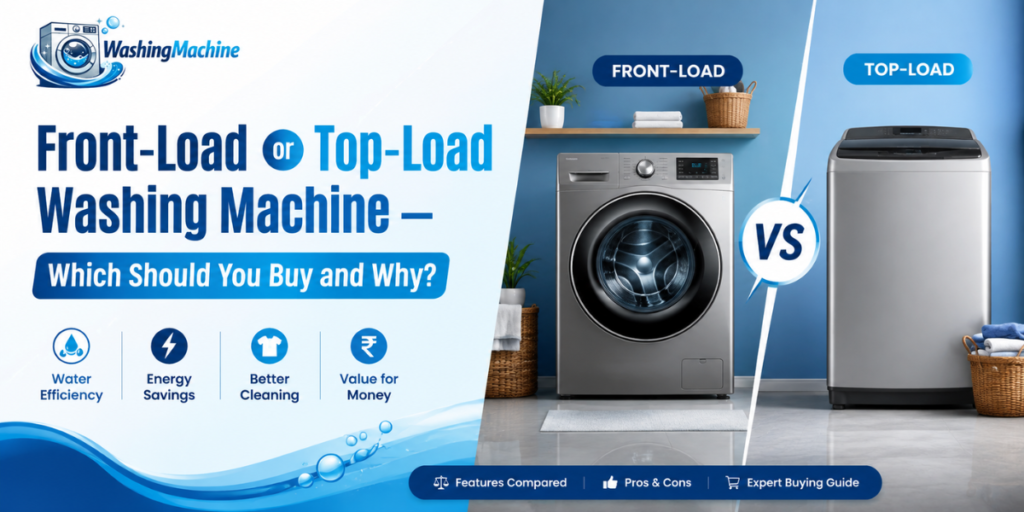
Buying a new washing machine feels simple until you actually stand in the showroom and face two rows of machines — one with the door on the side, one with the door on top. Both promise clean clothes. Both come in every budget range. So how do you actually decide?
This guide breaks down the front load vs top load debate in plain terms, so you can pick the machine that actually fits your home, your water supply, and your daily routine — not just the one the salesperson pushes hardest. And since every washing machine needs upkeep eventually, we’ll also touch on what to expect from Washing Machine Repair in Pune, so you know what you’re signing up for long after the purchase.
Front-Load vs Top-Load: The Basic Difference
The core difference is in how the drum is positioned and how it washes clothes.
- Front-load washing machines have a horizontal drum. Clothes tumble through a small amount of water using gravity, rubbing against each other to loosen dirt.
- Top-load washing machines have a vertical drum with an agitator or pulsator at the bottom. Clothes soak in a larger volume of water while the pulsator spins them around.
That one design difference is responsible for almost every other distinction between the two — water usage, wash quality, price, and even how long the machine lasts.
Front-Load Washing Machines: Pros and Cons
Advantages:
- Better cleaning performance — the tumbling action combined with steam and heat options handles tough stains more effectively.
- Lower water consumption — typically uses 40–50% less water per cycle than a top-load machine, which matters a lot in cities with erratic water supply.
- Gentler on clothes — less mechanical stress means fabrics last longer.
- Space-efficient — can be stacked with a dryer or fitted under a countertop.
- Better energy efficiency ratings on average.
Disadvantages:
- Higher upfront cost compared to a top-load machine of similar capacity.
- Longer wash cycles, often 1.5–2 hours for a full load.
- Cannot add clothes mid-cycle once the door locks (though some new models allow a pause-and-add feature).
- More sensitive to water quality — hard water and low pressure can affect performance and increase maintenance needs.
Top-Load Washing Machines: Pros and Cons
Advantages:
- Lower purchase price, making it the go-to choice for budget-conscious buyers.
- Shorter wash cycles, usually 30–45 minutes.
- Easy to add or remove clothes mid-wash.
- Simpler mechanics, which often means cheaper and quicker repairs.
- No bending required — easier to load and unload for people with back or knee issues.
Disadvantages:
- Uses more water per cycle.
- Rougher on fabrics due to the agitator, which can cause more wear over time.
- Slightly lower cleaning performance on heavily soiled clothes compared to front-load machines
- Takes up more floor space and can’t be stacked with a dryer.
Best Washing Machine for Pune Water: What You Should Know
Water quality is one of the most overlooked factors in this decision, and it matters a lot if you live in Pune. Depending on your locality, water can range from moderately soft (areas closer to the main Khadakwasla-fed supply lines) to noticeably hard, especially in areas relying heavily on borewell or tanker water.
Here’s why this matters for your purchase:
- Hard water accelerates limescale buildup in the drum, heating element, and pipes — this affects front-load machines more, since they rely on heating elements for warm/hot washes.
- If your area has hard water, consider a machine with a built-in water softener function or plan on using a descaling agent every 2–3 months regardless of which type you choose.
- Top-load machines are generally more forgiving with inconsistent water pressure, which can be useful in areas of Pune where municipal water supply timing is irregular and homes rely on overhead tanks with variable pressure.
- If your building has low water pressure, check the minimum pressure requirement for front-load machines before buying — some models need consistent pressure to fill and rinse properly.
Bottom line for Pune buyers: if your water supply is hard or inconsistent, either invest in a good inlet water filter alongside a front-load machine, or lean toward a top-load machine, which tends to handle water quality issues with fewer performance complaints.
Washing Machine Buying Guide: Key Factors to Compare
Before you decide, weigh these factors against your actual household needs:
- Family size and load frequency — Larger families with daily laundry may benefit from a top-load machine’s speed; smaller households doing 2–3 loads a week can make the most of a front-load machine’s efficiency.
- Budget — Top-load machines typically cost 20–30% less for comparable capacity.
- Available space — Front-load machines suit compact or stacked setups; top-load machines need more floor clearance for the lid to open.
- Water and electricity costs — If you’re on a metered or tanker-dependent water supply, the water savings from a front-load machine can add up significantly over a year.
- Fabric care — If you wash a lot of delicate fabrics, a front-load machine’s gentler tumbling is worth the extra cost.
- Maintenance comfort — Top-load machines are simpler to service and typically have lower repair costs.
Washing Machine Repair: What to Expect After Purchase
Whichever type you choose, regular upkeep will extend its life significantly. Common issues differ between the two types:
Front load washing machine repair commonly involves:
- Door seal (gasket) wear and mold buildup
- Drain pump blockages
- Heating element failure due to limescale
- Bearing wear from constant tumbling
Top load washing machine repair commonly involves:
- Agitator or pulsator wear
- Lid switch issues
- Water inlet valve problems
- Belt or motor coupling wear
If you’re searching for washing machine repair near me, it helps to know your machine type and model number in advance — this speeds up diagnosis and often reduces the visit cost, since technicians can bring the right parts the first time.
For residents specifically looking for washing machine repair in Pune, choose a technician experienced with your machine’s brand and type, and always ask whether they carry genuine spare parts — especially for front-load machines, where components like door seals and heating elements vary significantly between models.
Final Verdict: Which Should You Buy?
There’s no universal winner — only the better fit for your situation:
- Choose a front-load washing machine if you want better cleaning, care about water savings, have soft-to-moderate water quality, and don’t mind a higher upfront cost.
- Choose a top-load washing machine if you want a lower price, faster wash cycles, easier maintenance, and you live in an area with hard or inconsistent water supply.
Think about your daily routine, your water situation, and your budget together — not in isolation. The right washing machine isn’t the one with the most features; it’s the one that fits how your household actually does laundry.
Frequently Asked Questions
1. Which is better, front-load or top-load washing machine?
Front-load machines offer better cleaning performance and use less water, making them ideal if water efficiency matters to you. Top-load machines are more affordable, faster, and easier to maintain — a better fit for larger families or tighter budgets.
2. Which washing machine is best for Pune’s water conditions?
If your area has hard or inconsistent water supply, a top-load machine tends to handle it better with fewer performance issues. For front-load machines, pairing them with a water softener or inlet filter is recommended to prevent limescale buildup.
3. Does a front-load washing machine use less water than a top-load one?
Yes. Front-load machines typically use 40–50% less water per cycle since they rely on tumbling action rather than fully submerging clothes, unlike top-load machines.
4. How often should a washing machine be serviced to avoid repairs?
It’s recommended to descale the machine every 2–3 months, especially in hard water areas, and get a professional check-up once a year. Regular maintenance significantly reduces the need for washing machine repair in Pune and extends the machine’s lifespan.
5. Is top-load washing machine repair cheaper than front-load repair?
Generally yes. Top-load machines have simpler mechanics, so repairs like agitator or lid switch issues are quicker and less expensive. Front-load repairs — such as door seal or heating element replacement — tend to cost more due to more complex parts.