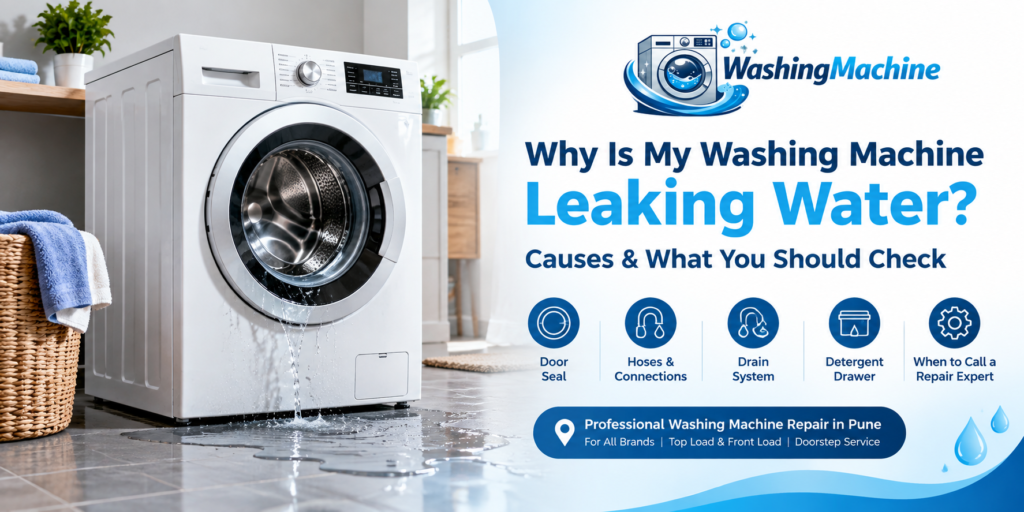
A washing machine that suddenly starts leaking water can turn a normal laundry cycle into a frustrating problem. Whether you notice a small puddle underneath the machine or a larger amount of water around the door, it is important to identify where the leakage is coming from before continuing to use the appliance.
Washing machine leaking water can happen because of a loose hose, damaged door seal, blocked drain system, excessive detergent, an unbalanced load, or an internal component that needs professional attention. The problem can occur in both top-load and front-load washing machines.
If you are in Pune and the leakage continues after basic checks, professional washing machine repair in Pune can help identify the problem and prevent further damage to the appliance or surrounding area.
Where Is Your Washing Machine Leaking Water From?
Before trying to fix the problem, check the location of the water. The source can provide an important clue about what may be wrong.
Common areas include:
- Around the washing machine door
- Underneath the washing machine
- From the back near the water inlet
- Around the detergent drawer
- Near the drain hose
- From the bottom during the spin cycle
- Around the drain pump area
Switch off the washing machine and unplug it before inspecting hoses or other accessible parts.
Washing Machine Leaking From the Door
Front-load washing machines commonly use a rubber door gasket to create a watertight seal. If the gasket becomes damaged, dirty, loose, or worn, water may escape from the front of the machine.
Check the rubber seal for:
- Small tears or cracks
- Objects trapped inside the gasket
- Excessive dirt or detergent buildup
- Loose sections
- Signs of wear
A damaged gasket generally needs replacement rather than a temporary repair.
Overloading the drum can also push clothes against the door and contribute to leakage. Always follow the manufacturer’s recommended load capacity.
Washing Machine Leaking Water From the Bottom
If you find water underneath the appliance, check the easily accessible connections first.
A loose or damaged drain hose can allow water to escape during draining. Similarly, a loose inlet connection may cause water to leak while the machine is filling.
Other possible sources include:
- Damaged drain hose
- Loose hose connection
- Drain pump problems
- Internal pipe leakage
- Worn seals
- Damaged tub components
If the water is coming from inside the machine rather than an accessible hose or connection, professional inspection is usually safer than attempting to dismantle the appliance yourself.
Washing Machine Water Leakage During the Spin Cycle
Some are notice the leakage only when the machine reaches the spin cycle.
During spinning, the drum rotates at high speed. If the machine is overloaded, badly balanced, or placed unevenly, excessive movement can occur.
Check whether:
- The washing machine is standing level.
- The load is distributed evenly.
- The drum is not overloaded.
- The machine is making unusual sounds.
- Water appears only during high-speed spinning.
If the machine continues to leak despite having a properly balanced load, the problem could involve a hose, seal, drain system, or internal component.
Washing Machine Leaking From the Detergent Drawer
Water can sometimes come out through the detergent drawer instead of entering the drum correctly.
This may happen when:
- The drawer is blocked with detergent residue.
- Too much detergent is being used.
- The water inlet is not flowing correctly.
- The drawer or surrounding channel is dirty.
- Water pressure is affecting the detergent compartment.
Remove the detergent drawer if your manufacturer’s instructions allow it and clean away accumulated detergent and residue.
Avoid using excessive detergent. More detergent does not necessarily mean cleaner clothes and can create excess foam or buildup.
Check the Washing Machine Inlet Hose
The inlet hose connects the washing machine to the water supply. Inspect the connection points for dripping or moisture.
Look for:
- Loose connections
- Cracks in the hose
- Damaged rubber washers
- Water dripping from the tap connection
- Water appearing only during the filling stage
If the hose is damaged, replacing it is usually preferable to trying to seal a cracked section.
Check the Drain Hose
The drain hose carries wastewater away from the washing machine. A loose, cracked, blocked, or incorrectly positioned hose can cause water to appear around the appliance.
Check that:
- The hose is securely connected.
- There are no visible cracks.
- It is not sharply bent or crushed.
- The drainage connection is secure.
- Water is not backing up from the drain.
A drainage problem can become more noticeable when the machine pumps out water.
Top Load Washing Machine Repair for Leakage Problems
Top-load machines can experience leakage from several areas, including the inlet hose, drain hose, detergent dispenser, tub, pump, or internal connections.
If you have a top load washing repair requirement, first identify whether the water appears during:
- Filling
- Washing
- Draining
- Spinning
The timing of the leak can help a technician narrow down the problem.
For example, leakage during filling may point toward the inlet system, while leakage during draining may indicate a problem with the drain hose or pump.
Front Load Washing Machine Repair for Water Leakage
Front-load washing machines have additional components that can contribute to leakage, particularly around the door.
Common areas to inspect include:
- Door gasket
- Door glass
- Detergent drawer
- Drain hose
- Inlet hose
- Drain pump
- Internal water connections
If you notice water coming from the door area even after cleaning the gasket and checking the load size, professional front load washing machine repair may be required.
If you suddenly notice a large amount of water, stop the machine rather than allowing the cycle to continue.
What Should You Do If Your Washing Machine Starts Leaking?
Follow these basic steps:
1. Stop the washing cycle
Use the appropriate stop or cancel function.
2. Disconnect the power
If it is safe to do so, switch off and unplug the machine. Never handle electrical connections while standing in water.
3. Turn off the water supply
Close the water inlet tap connected to the washing machine.
4. Identify the approximate leak location
Check whether the water is coming from the front, back, underneath, or detergent drawer.
5. Check accessible hoses
Look for obvious loose connections, cracks, or damaged hoses.
6. Avoid repeated testing if the leak is significant
Continuing to operate a leaking appliance can allow water to reach electrical components or damage flooring and nearby furniture.
When Do You Need Professional Washing Machine Repair?
A small hose connection may sometimes be easy to identify, but not every leakage problem should be handled as a DIY repair.
Professional assistance is recommended when:
- The source of the leak cannot be identified.
- Water is coming from inside the machine.
- The door gasket is damaged.
- The drain pump may be faulty.
- Internal pipes or seals appear damaged.
- The machine leaks repeatedly.
- The appliance makes unusual noises while leaking.
- Water reaches electrical components.
- The machine stops working after the leakage occurs.
If you are searching for washing machine repair in Pune, choose a technician who can inspect the actual problem rather than replacing parts without diagnosis.
Washing Machine Repair in Pune for Leakage Problems
Washing machine leakage can happen in homes across Pune, whether you use a front-load or top-load appliance. If basic checks do not resolve the issue, a local technician can inspect the machine and identify the faulty component.
Local service requirements can come from areas such as Baner, Balewadi, Aundh, Wakad, Hinjewadi, Kothrud, Karve Nagar, Shivajinagar, Viman Nagar, Kharadi, Hadapsar, Koregaon Park, Kalyani Nagar, Pimple Saudagar, Pimpri-Chinchwad, Kondhwa and Bavdhan.
When booking service, provide the technician with useful information such as:
- Washing machine brand
- Front-load or top-load model
- Where the water is appearing
- Whether leakage happens during filling, washing, draining, or spinning
- Any error code shown on the display
- Any unusual noise or vibration
This information can make diagnosis easier.
How to Prevent Washing Machine Water Leakage
Regular maintenance can help reduce the chance of unexpected leakage.
Clean the detergent drawer
Remove detergent buildup regularly so water can flow correctly.
Inspect hoses
Check inlet and drain hoses for cracks, bulges, or loose connections.
Avoid overloading
Follow the recommended load capacity for your washing machine.
Use the correct amount of detergent
Excess detergent can create buildup and excessive foam.
Keep the machine level
An uneven appliance can vibrate excessively during spinning.
Clean the door gasket
For front-load machines, wipe the rubber gasket regularly and remove trapped objects or residue.
Don’t ignore small leaks
A small leak can become worse if the underlying problem is not addressed.
Washing Machine Repair Near Me in Pune
When a washing machine starts leaking, searching for Washing Machine Repair Near Me can help you find a local technician who can inspect the appliance at home.
For residents of Pune, local service can be useful when the washing machine cannot be safely operated or moved to a repair shop. Whether the problem involves a front-load machine, top-load machine, drain system, hose, door gasket, or another component, proper diagnosis should come before replacing parts.
If the leakage is significant, stop using the machine, turn off the water supply, disconnect the appliance if it is safe, and arrange professional inspection.
Final Thoughts
A washing machine leaking water should not be ignored, even when the leak appears small. Start by identifying where the water is coming from and check accessible hoses, connections, detergent buildup, load balance, and the door gasket on front-load models.
If the leakage continues or appears to come from inside the appliance, professional service is a safer option. For households across Pune and nearby areas, getting the problem inspected early can help prevent further water damage and unnecessary component replacement.
If you need washing machine repair in Pune, choose a local service provider that handles both top-load washing repair and front load washing machine repair and can diagnose the leakage before recommending a repair.